- Dr Karan's Weekly Dose
- Posts
- 🥝 Fiber Hacks, GLP-1s & The Dreamer’s Trap
🥝 Fiber Hacks, GLP-1s & The Dreamer’s Trap
The Weekly Dose - Episode 170
The Fiber Hack No One Knows About
(But Should)

Stew your fruit.
I know… it sounds like something your grandmother would make but grandmothers tend to be right about two things: love and digestion.
And when it comes to digestion, stewing fruit is one of the smartest, most evidence-aligned things you can do for your gut… especially at breakfast.
30-second science
Fruits like apples, pears, plums, peaches and apricots contain a special type of soluble fiber: pectin.
Pectin is phenomenal for your microbiome; it’s one of the most heavily studied prebiotic fibers in the world… but raw pectin is locked up inside the plant matrix. Your gut bacteria can ferment it, but the process is slow, incomplete, and for sensitive guts, sometimes uncomfortable.
When you heat fruit gently with water, something beautiful happens:
Pectin transforms: The heat partially breaks down the pectin structure and releases it from the plant cell walls, making it far more accessible and fermentable to your gut bacteria.
Fermentation becomes smoother: The change in structure makes pectin less FODMAP-triggering for many people. (Not fully, but significantly easier for sensitive guts.)
SCFA production increases: Better fermentation means more short-chain fatty acids like butyrate which equals better gut lining health, reduced inflammation, improved motility, improved metabolic signalling.
You reduce the fructose load: Stewing helps blend fructose with soluble fiber more evenly, which slows intestinal absorption…a win for bloat-prone guts.
The final result is a warm, soothing gut-friendly fiber boost that your microbes will treat like a Michelin-starred meal.
The “right” kinds of fiber
Most people are falling 15–20g short of their daily fiber intake and when they try to increase fiber, they do it wrong: by suddenly adding raw salads, raw fruit, raw veg, tonnes of beans, or grainy bowls the microbiome isn’t ready for.
So people then get bloating, discomfort, and the “fiber doesn’t work for me” myth.
How to stew fruit (2-step recipe, 30 seconds)
Here’s the simplest version; no chef skills needed:
Chop 2 apples (or pears) into cubes.
Simmer in a pan with a splash of water + pinch of cinnamon for 10–12 minutes until soft.
That’s it. You’ve just created a gut-friendly fiber bowl.
Store in the fridge for 3–4 days and add to:
Greek yoghurt
Porridge
Chia pudding
Smoothies
Or eat by the spoonful!
The gut-health benefits (in human language)
My routine (and why my wife is now obsessed)
Every week during my wife’s pregnancy, I’ve been batch-making stewed apples and pears as part of our “gut-friendly breakfast armour.”
Pregnancy slows gut motility dramatically, and the microbiome shifts… so gentle fibres like stewed fruit have been a lifesaver.
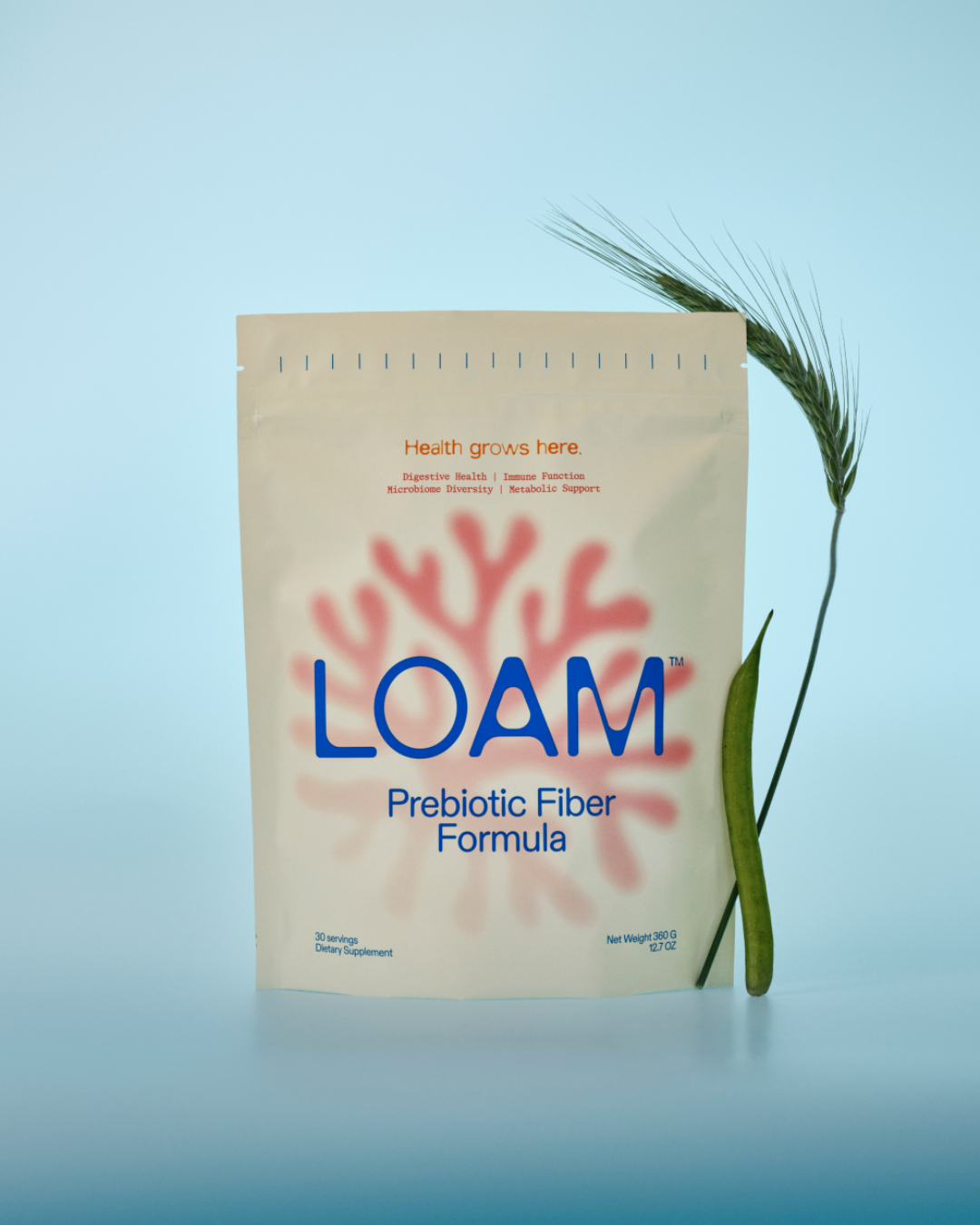
P.S some of the feedback from LOAM has been incredible (and funny!)

You can grab yourself some here:
Muscle Loss with GLP-1s

If you spend five minutes on the internet, you'll hear someone claim that GLP-1 medications “melt your muscle” or “destroy your metabolism”:
GLP-1s do not directly cause muscle loss.
Rapid weight loss does; with or without medication.
1. Muscle loss happens whenever humans lose weight quickly
When you lose weight, your body doesn’t exclusively burn fat. Some lean mass; which includes water, glycogen, organs and muscle… always shifts. This isn’t a GLP-1 thing… it’s a human biology thing.
Studies comparing weight loss by diet, by GLP-1s, and by bariatric surgery show basically the same proportion of lean mass change (PMID: 38937282). The amount tends to be proportional to the total weight lost, not the tool used to get there.
In other words:
Lose weight quickly = lose more lean mass.
Lose weight slowly = lose less.
Lift weights + eat enough protein = keep more.
2. High-quality research shows muscle quality actually improves
This is the part no one talks about because it kills the doom narrative.
When researchers look beyond broad estimates like DEXA or bioelectrical impedance…which can’t distinguish muscle from water… and instead use MRI (the gold standard), the picture changes dramatically.
MRI-based studies show:
Most of the “muscle loss” during GLP-1 therapy is reduction in intramuscular fat, not shrinkage of contractile muscle tissue (PMID: 40858197).
This means the muscle becomes denser, stronger per unit, and more metabolically efficient.
So while total lean mass might drop a little, the quality of what remains tends to improve.
It’s the difference between shrinking a sponge versus squeezing out the water so it works better.
3. GLP-1s do not directly catabolise muscle
There’s no evidence that GLP-1 agonists directly trigger muscle breakdown pathways.
No spike in muscle-wasting hormones, changes in protein synthesis signalling or any biochemical fingerprint of medication-induced muscle atrophy.
In fact, by improving insulin sensitivity and reducing chronic inflammation, GLP-1s may create a more favourable metabolic environment for muscle to function.
The real risk factor is something far simpler: eating too little protein + doing no resistance training.
4. The real danger: losing weight without lifting weights
When appetite plummets (especially on GLP-1s), people accidentally eat:
too little protein
too few calories
too little total nutrition
Combine that with no resistance training and the body chooses the simplest path: reducing unused tissue.
GLP-1 or not, the rules of muscle preservation remain unchanged:
Lift heavy things
Eat enough protein (goal: ~1.6 g/kg/day if actively losing weight)
Avoid losing weight too fast (aim: 0.5–1% of bodyweight per week)
Do these three things and your muscle is more than safe… it’ll likely improve.
Most of the panic around GLP-1-induced muscle loss is misunderstanding basic physiology.
P.S if you want a deep dive into GLP-1s, weight loss, metabolism and nutrition without the taboos and judgement… pre-order my new book “This Is Vital Information”. It’s currently 16% off on Amazon:
Or you can get signed copies using the link here:

Quick interlude: If you think The Weekly Dose is cool 😎, share this newsletter on socials, mention it in your newsletter, and/or hit forward to your health-curious friends, family, and that one fiendish coworker who loves learning about health stuff.
Reminder: This newsletter is free, always will be and I send it out every Sunday to give you in-depth insights into the health topics!
The Dreamer’s Trap

One idea I keep coming back to in my 30s is the sunk cost fallacy… the subtle psychological force that convinces you to hold on long after you should’ve walked away.
And I think about it often because I’ve lived through it… multiple times.
Jobs, friendships, projects, degrees, business ideas… even ways of thinking.
The pattern is always the same: you invest months or years into something, you sacrifice, you struggle, you push… and then the thought of leaving feels like betrayal.
Sunk cost fallacy is the brain’s way of protecting your ego from pain aka loss aversion; the idea that losing something hurts twice as much as gaining something of equal value feels good. The brain would rather keep you stuck than let you face the discomfort of admitting a misstep.
But perseverance and sunk cost fallacy live right next to each other in the mind. One makes you unstoppable and the other makes you blind… and the line between them is thinner than you think.
We grow up hearing self affirmations like “never quit”, “push through”, “winners don’t walk away” (or maybe I just watched too much WWF in the 90s)
But no one tells you that persistence is meaningful only when the direction is still right.
I’ve stuck with things before simply because stopping felt like defeat. I wasn’t chasing the dream anymore… I was chasing the effort I had already spent.
But past effort does not increase future value and the time already invested isn’t a deposit…
Smart people will cut losses when the path no longer makes sense and fools double down to avoid admitting the loss… and I say that with compassion because I’ve been both.
The ugly paradox is that the same qualities that fuel your success can also trap you.
This “identity inertia” continues because stopping requires rewriting the story of who you think you are. That story is often scarier to confront than the reality of the situation.
But neuroscience offers a different lens and one that made everything click for me.
Every choice you make strengthens a neural pathway and every habit you maintain becomes easier to repeat. Your brain rewards consistency, even when the consistency is hurting you hence your brain hates uncertainty, even when uncertainty is exactly what you need.
This is why sunk cost fallacy feels so heavy… because you’re not only walking away from an investment but from a neural pattern your brain believes is part of you.
But letting go is also a form of perseverance but this time towards growth, not inertia.
One of the most liberating things I’ve learned in my 30s is this… allow yourself to evolve without asking permission from your past.
Here’s the litmus test I use now:
Am I staying because I believe in the future of this path?
Or because I’m afraid the past will feel wasted?
Only one of those is a good reason. Life is too short to live in contracts you signed with old versions of yourself.
👋 Who are you again? I’m Karan Rajan - a doctor and curious explorer of all things health and wellness. I host the Dr Karan Explores Podcast and have written two books "This Book May Save Your Life" and "This Is Vital Information" (you can pre-order it now!) and have just founded a microbiome company, LOAM Science to create the best fiber product in the world!
Every Sunday, I share 3 interesting things about health, life and science to make your life easier, healthier and happier. (Disclaimer: I’m more your friend with health benefits. None of this is medical advice.)
And oh, you if also feel strongly about some health things or just want to say hi? Hit reply... I’d love to hear it and hear from you! (yes I read every reply!!!)
Oh and before you wiggle away until next Sunday… here’s the subscribe link to my newsletter if you fancied sharing it with a friend, family member or your arch nemesis!
